

Where the Good Grows
In a dark park, the ice-addict was so pissed off about something that he took a long knife and stabbed a fellow junkie in the back with it. He stabbed him so hard Michael Bartlett claimed the blade went right through the man’s body. Then, as other people tried to subdue the stabber, Michael—an ex-registered nurse—dropped to his knees.
Unable to see if the group had successfully warded off the attacker, he proceeded to tend to the victim’s wounds.
By the time emergency services arrived, he had stopped the bleeding and sealed the wound.
But instead of Channel Nine running a hero piece on him, or the police taking his details so they could recommend him for a hero’s award, Michael, once everything had calmed down, simply returned to his home: the front seat of his car.
He behind the driver’s seat, Diane in the passenger seat, both still full of adrenaline. They would pray to God, then wait for sleep.
God, Michael believed, had warned him not to take the jab. Since then, the unjabbed couple had lost their new house and ended up living in an old caravan with their fourteen-year-old son. A few years later, because they couldn’t get back on their feet, the authorities removed their boy.
While there are a few areas they didn’t tell me about—and I sensed they were extraordinarily difficult times, including a long stay in a mental health facility for Michael, who admits he broke—they lost the caravan too, along with all their possessions.
Finally, they were able to access some of their super and bought the campervan they’re living in today, parked in a remote showground in Queensland.
They pay $27 a night to stay, and Diane doesn’t have to worry about the rangers coming back because they own nothing now that the rangers would want.
But wherever they are camped, they are not alone. Down here upon the rocks of society, a safety net is being established. A net that, once you realise you are as almost naked as you arrived (except your mother is there to hold you), can wrap itself around you like an op-shop blanket.
Kew Library Lullaby
Homage to a Homeless single mother
Based on a true story. Lyrics MGG
Suddenly there’s hungry people asking if you’re hungry, before splitting their food and offering you some. And while they never use the phrase, what they are really saying is: I can’t save you, my brother, my sister, but I can be your temporary shelter from the storm.
And with so many storms breaking, with the winds of forced change ripping the gold from our golden days, this is what we are finding: unconditional kindness where we’ve been taught it would be dog-eat-dog. Pure and unadulterated empathy where we’ve been taught there were only rocks.
What if there is a flaw in their system of destruction; an irremovable splinter implanted in us by God before we have even contemplated leaving the womb? A relic to them, but a series of bridges connecting us at levels you have to reach destitution to find.
Bridges built from something that was here long before us and that all the hate that has ever been, has been able to burn them all.
I can see them now, in my mind’s eye, as I finish writing this. An ever re-connecting series of illuminated bridges that can form and reform upon nothing more than the smile of a stranger.
A vast and entangled series of bridges connecting soul after aching soul, in a process that angels have christened, The Hope for us All.
Henry’s Hand
Michael Gray Griffith
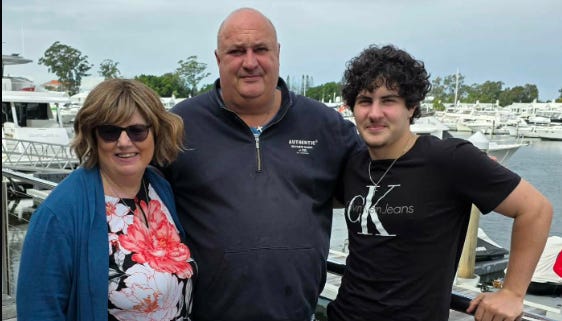
For Michael and Diane Barnett.
For more essays from Michael why not read his book.
Goodbye Road.
The book is now in The National Archives ( A sliver of our combined history secured.)
Published by John Stapleton, editor of ‘A Sense of Place Publishing.’


